Welcome to my blog where I share my experience of a beautiful trek in the Himalayas.
I wanted to do a trek which was over and above the altitude of 12000ft (3600 meters). In 2021, I trekked Kuari Pass which is at an altitude of 12000+ ft. Therefore, I was aware of how my body reacts to cold at a high altitude. I chose Rupin pass for a multitude of reasons. Rupin pass is famously known as a “Trek of surprises” wherein you witness dramatic change of nature at every turn. It comprises of all the nature’s components that one can ask for- rivers, snow, mountains, dense forests, and even waterfalls at an altitude of 12,544 ft!!
Day 1: Shimla-Bawta
Rupin Pass is located in Himachal Pradesh. A “pass” is a gap, or break, in high, rugged terrain such as a mountain ridge. It connects two valleys or mountains. The trek begins at Rupin valley and ends at Sangla valley.
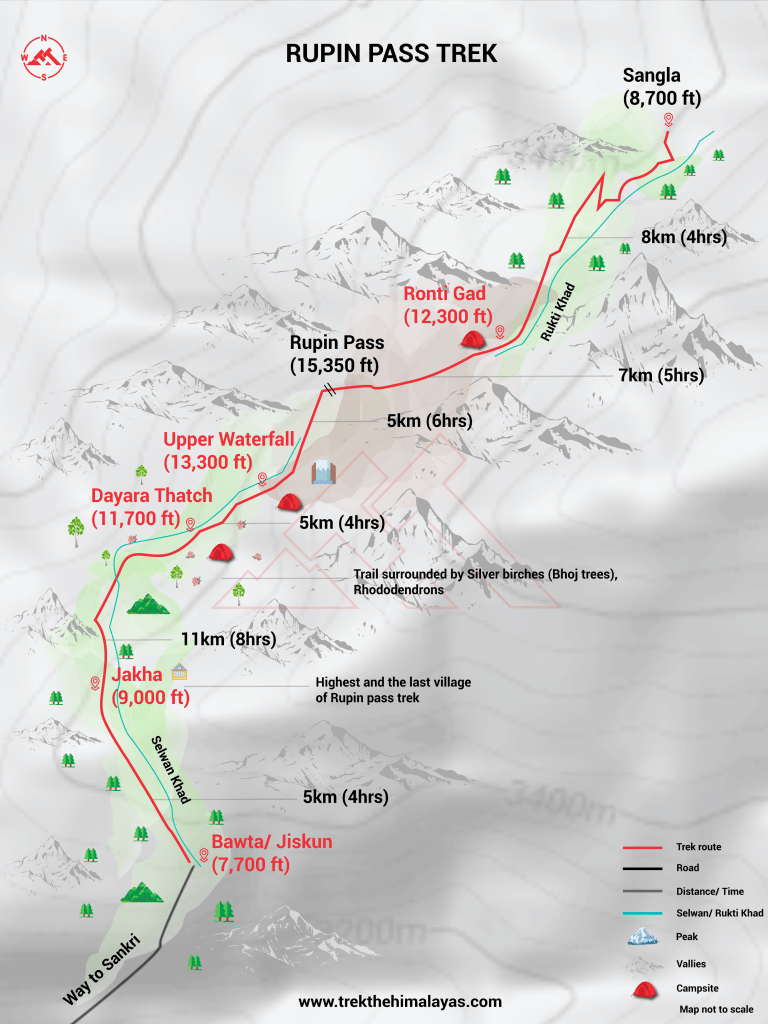
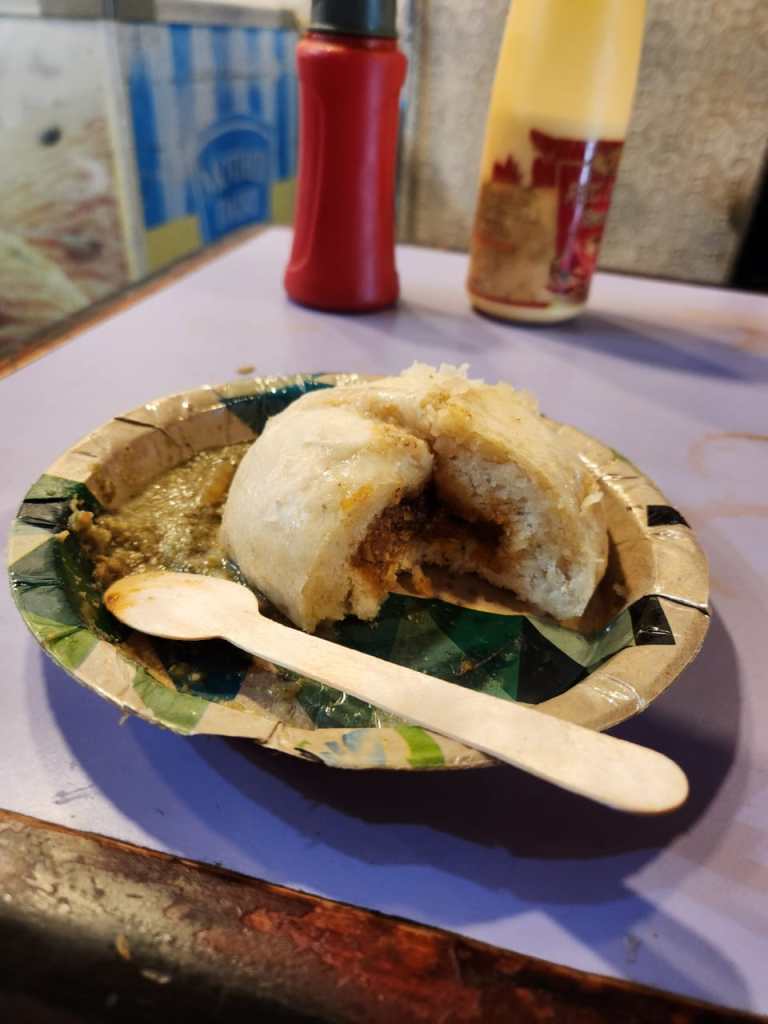
The trek starts from Bawta. Bawta is a remote village located around 195 kms from Shimla. Shimla to Bawta is a 9-hour bumpy ride where you have to drive through Chanshal Pass. Driving through the Chanshal Pass in is a heavenly experience, where every shade of the green colour can be seen on both sides of the road. During the long ride to Bawta, Pabbar river flows alongside, before you enter the coniferous trees of Bawta. On the way we saw wild berries endless and apple plantations. As we crossed Pabbar river, we could see distant snowy capped peaks of Dhaula Dar ranges. We took a break at a local restaurant for breakfast. I ate Siddhu Ghee, a local dish of Himachal Pradesh. It is a dough made of wheat flour(atta) filled with sweet stuffing and served with spicy chutney. I personally did not love the dish. However, it is worth trying. We reached Bawta in the evening. Everyone was given their rooms in the homestay, and we were briefed about the trek leaders, team and other details.
We met other fellow trekkers, introduced ourselves and got to know the whole team. At 8 P.M we were briefed about the whole itinerary, our medical checkups were conducted and finally the trek leader gave us a brief insight into the terrain, duration of the following day.
Day 2: Bawta to Jhaka
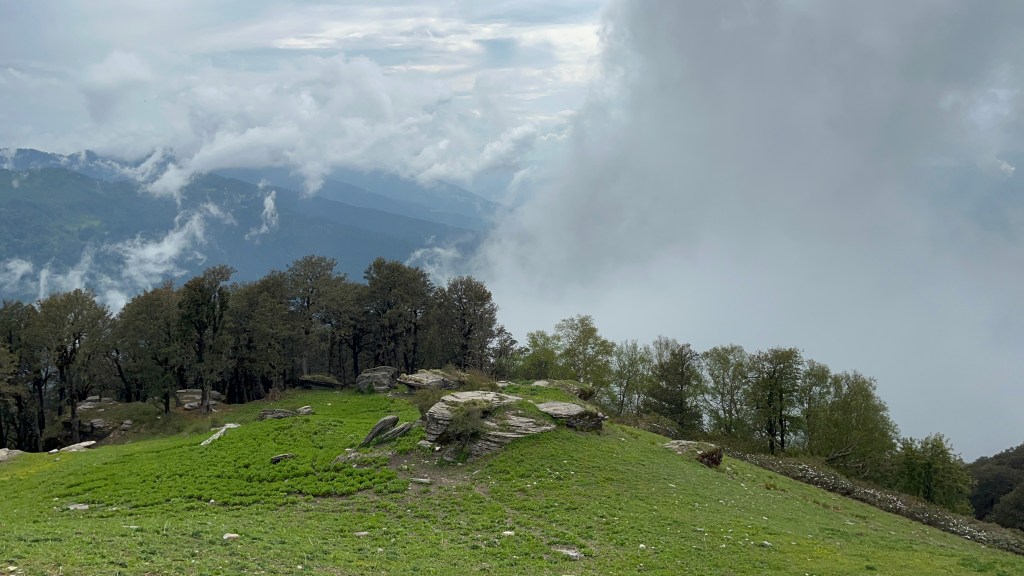
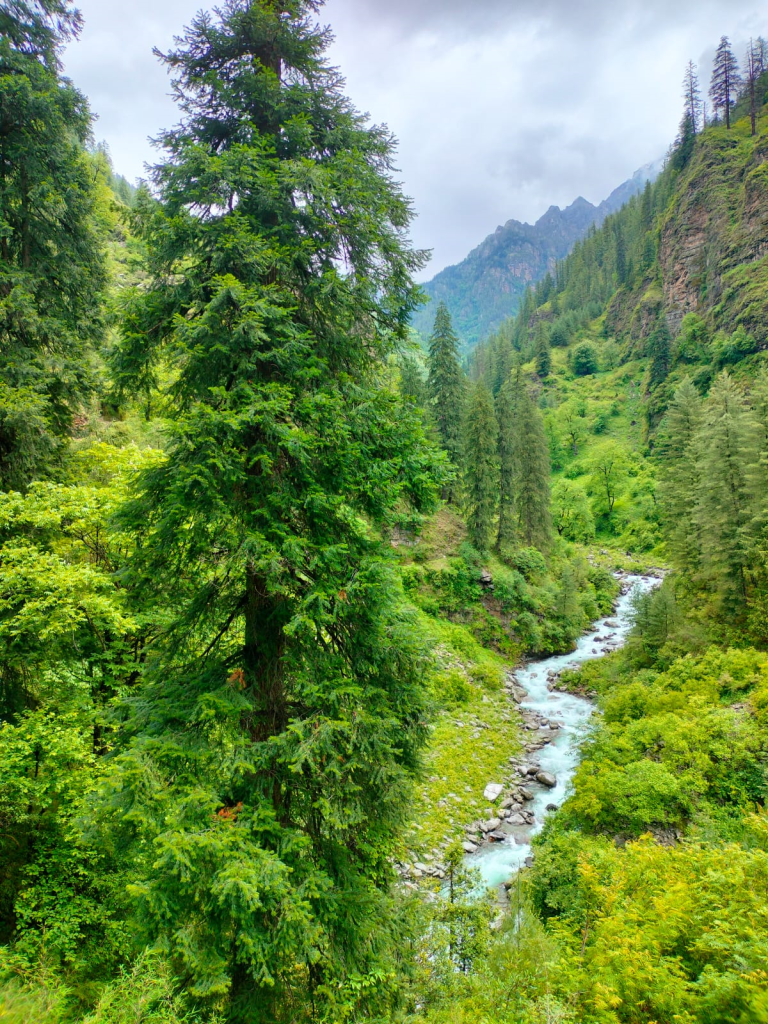
The first day of actual trekking begins from Bawta to Jhaka. The whole day of trekking is through the dense forest. I had underestimated this day, as I started feeling exhausted within 1 hour of trekking. The trail is a steep and continuous ascent as we keep walking to gain an altitude of 1,300 ft. After an hour, we crossed a wooden bridge where we met the Rupin River in its purest form. It is the only point where fresh water is available for drinking. The weather was clear, the sun was filtering through the dense canopy of forest. It was a hectic walk. Nevertheless, the scenery diverted our pain as we could hear the bustling sound of Rupin River which flowed along with us, and we kept climbing and finding our way through the dense forest. After 5 hours of ascent, we could see distant small houses. We had finally arrived at our next checkpoint, Jhaka Village!!
Day 3: Jhaka- Dhandreyas Thatch
Our Trek leader had warned us that this was going to be the most crucial day of our trek. Not because of its altitude, rather because of the sudden increase in the distance, tough terrain and exhausting hours. Firstly, the trail was going to change dramatically. We were going to start from forest, cross some boulders, overcome steep descents and enter onto snow patches. This meant that we had to quickly adapt to terrain and keep walking relentlessly. Secondly, we were going to be trekking continuously for 7 hours which many of us had never done before. Lastly, there was prediction of rains. Despite these challenges, the group was motivated to reach the next campsite.
Jhaka is known as the Hanging Village, as it literally hangs on the edge of the steep mountains. Jhaka is the last village. There is no human habitation on the trail after Jhaka. We started gradually ascending through the forests. As one wanders through the dense forests, suddenly, out of nowhere, there is a steep descent. This descent is like a climax of the movie. The whole scenery changes from this descent. We leave the dense forest with the descent. From this point, the Rupin River meanders furiously through the mountains, meadows, and goes under the snow bridges until we reach the Dhandreyas Thatch Campsite.
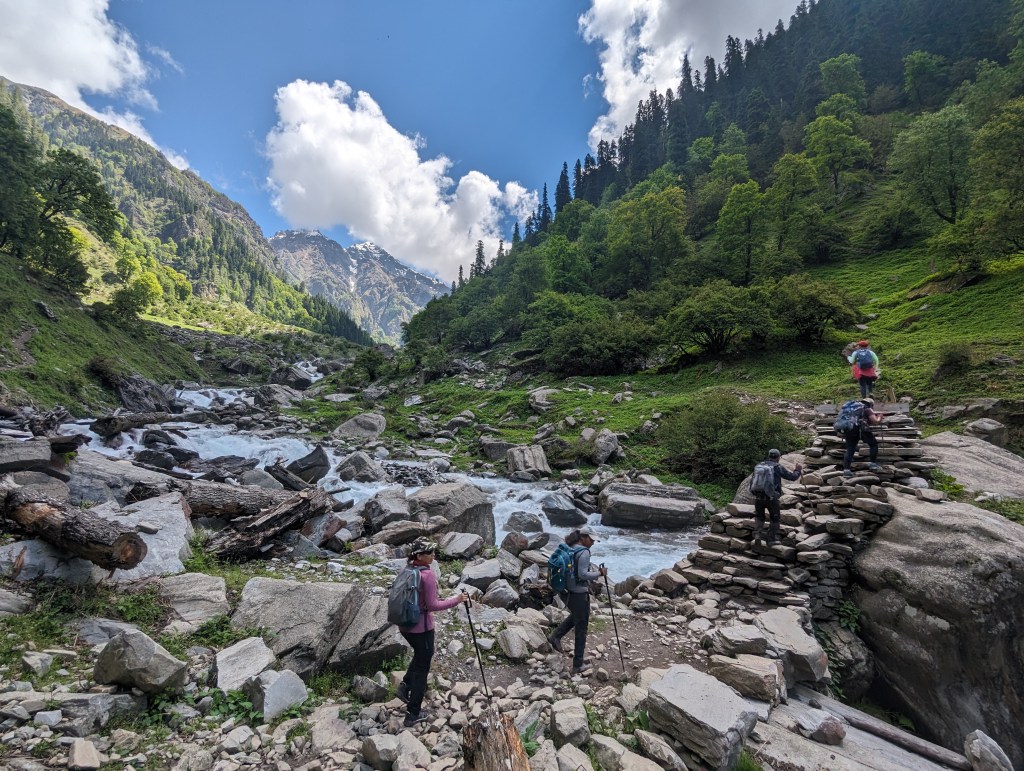
In the afternoon, we encountered the first snow patch of our trek. The trek leaders handled the situation efficiently, as some were trekking on the snow for the first time. It was fun to cross the snow bridges. However, it was also a bit terrifying, considering, you would fall directly into the river in case you slip. (PS: No one fell into the river; the trek leaders ensured our safety at every stage).
As we kept walking, the clouds started hovering over. We were caught in heavy rain as we were 0.5 kms away from our campsite. Nonetheless, we reached our campsite by 4 PM.
Dhandreyas Thatch has a beautiful meaning. Meadows are known by different names in the Himalayas. In Uttarakhand, meadows are known as “Bugyal”, in Kashmir meadows are known as ” Marg”, and in Himachal Pradesh meadows are known as “Thatch”. There is a bit discrepancy among the trekkers in pronouncing the name of this campsite. Some people pronounce it as “Dhan-treyas“. Leaving this phonetical confusion aside, the campsite is heavenly. Personally, Dhandreyas Thatch was my favorite campsite of the trek. From the campsite, you get the views of Lower Waterfall, Upper Waterfall on one side, and the beautiful meadows, that we left behind to reach the camp on the other side.
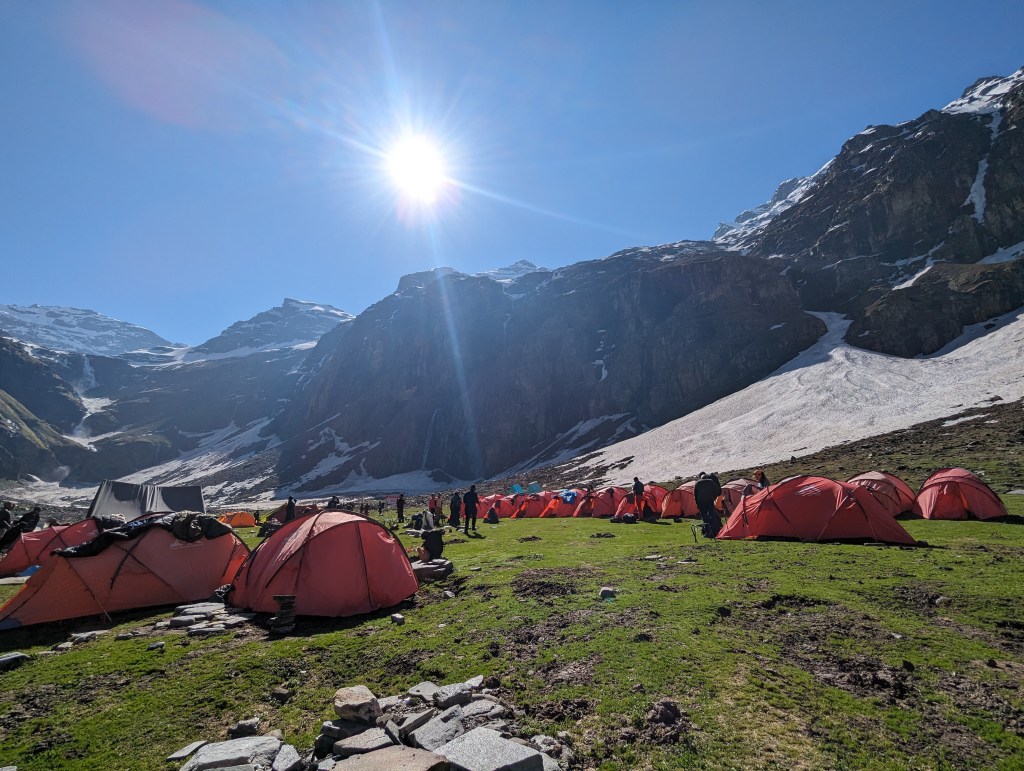
Day 4: Dhandreyas Thatch to Upper Waterfall
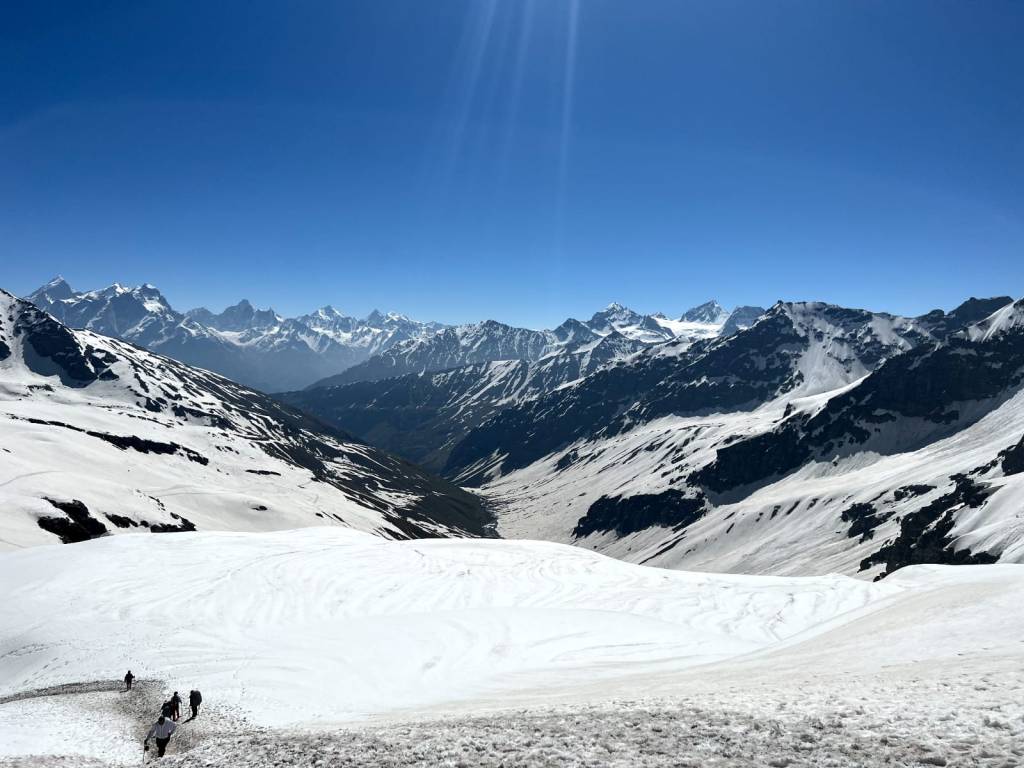
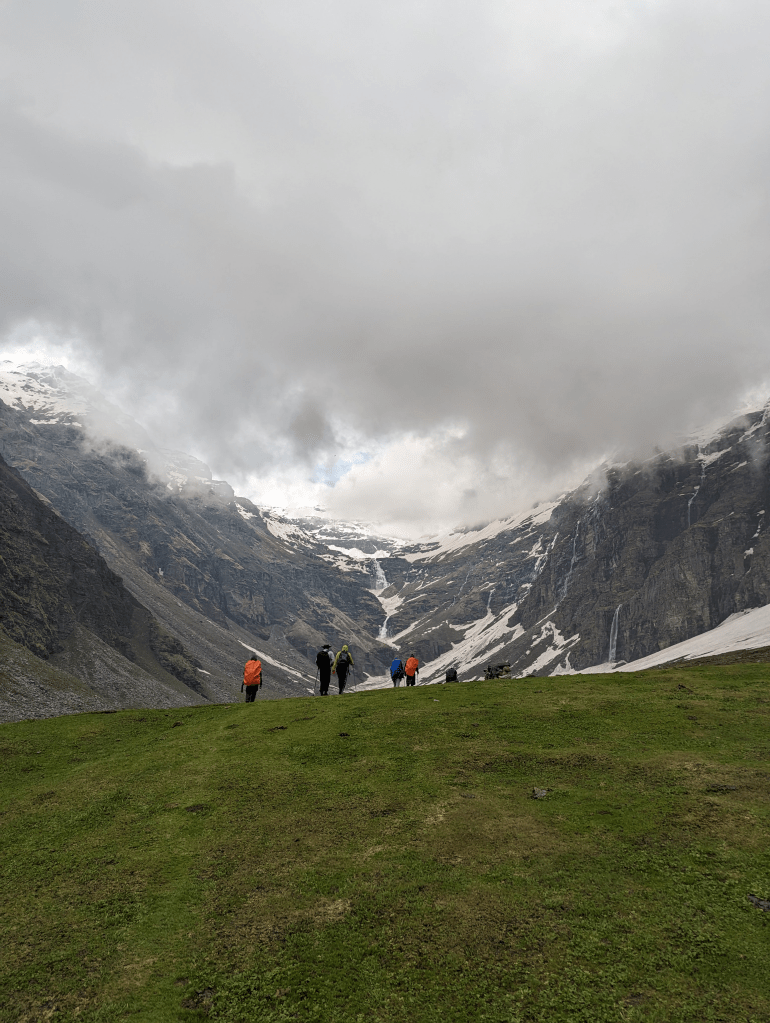
The trek to Upper Waterfall is relatively short, but it is steep and technical. We were equipped with gaiters and spikes. It was my first-time wearing spikes. In the picture above, the snowy slope on the right-hand side is the riskiest section while climbing towards Upper Waterfall. It is due to the melting snow during the daytime that can cause mini avalanches (Correct me, if there is no such term in mountaineering). Essentially, what happens is that a considerable portion of snow starts to crack and patches of snow along with rocks start falling. This is exactly what we experienced while crossing that section. Luckily, none of us got injured and we crossed the section in time. Thereafter, we climb through the waterfall. After a steep climb of about an hour, the scenery again changed completely. We were witnessing endless patch of snow. The freshness, depth of snow had increased exponentially as we started reaching the campsite. We arrived at the Upper Waterfall by 12 PM.
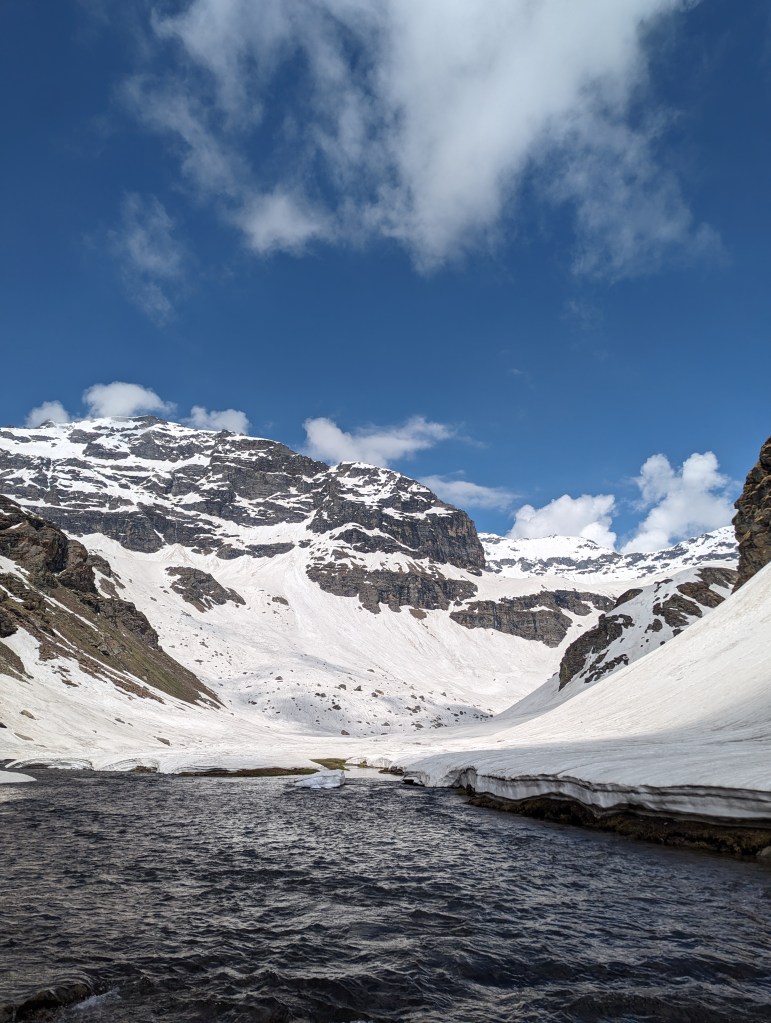
The briefing took place at around 4PM in the afternoon. This was earlier than the usual timing. We were explained about the technical sections, long distance and high altitude we were going to face tomorrow night. The campsite was extremely cold, even in the month of June. Moreover, the chances of altitude sickness were high as we were camping at 13,300ft! Personally, I’d never camped at this altitude. We were in our tents by 7 PM.
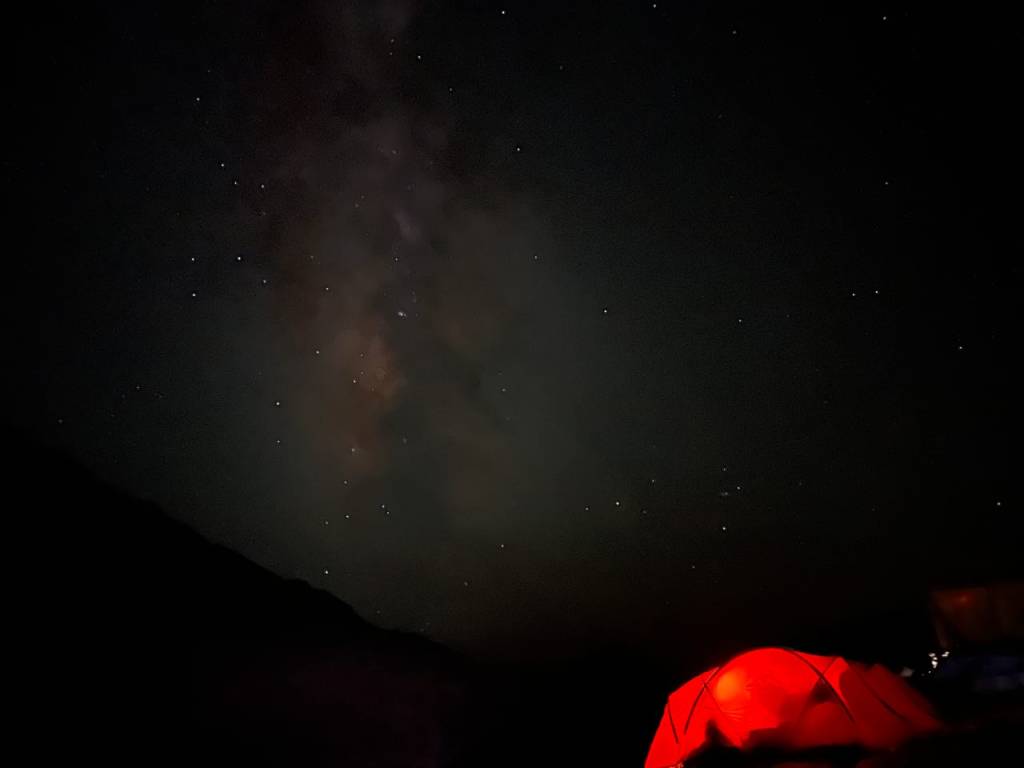
This campsite will always be in my memory, as I got to see the milky way with my naked eye for the first time! I was speechless looking at the milky way filled with endless constellations.
Day 5: Upper Waterfall-Rupin Pass- Ronti Gad
The summit push begun at 3:30 A.M in the morning. The night sky was luminating, milky way was shimmering above our tents. Everyone had their head torch, as it was pitch dark. A considerable distance is required to be covered at night, as the weather and snow is stable. During the daytime, snow keeps melting, which is dangerous for making the trail and navigation. Luckily, our team with constant pace covered a good distance by 7 A.M.
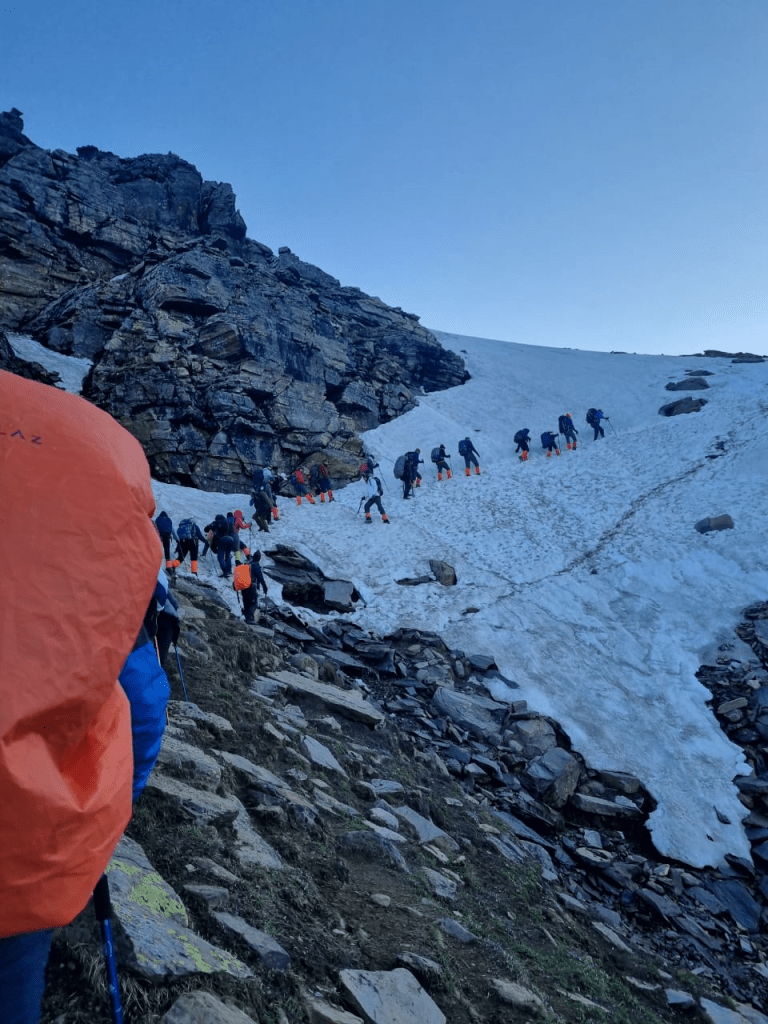
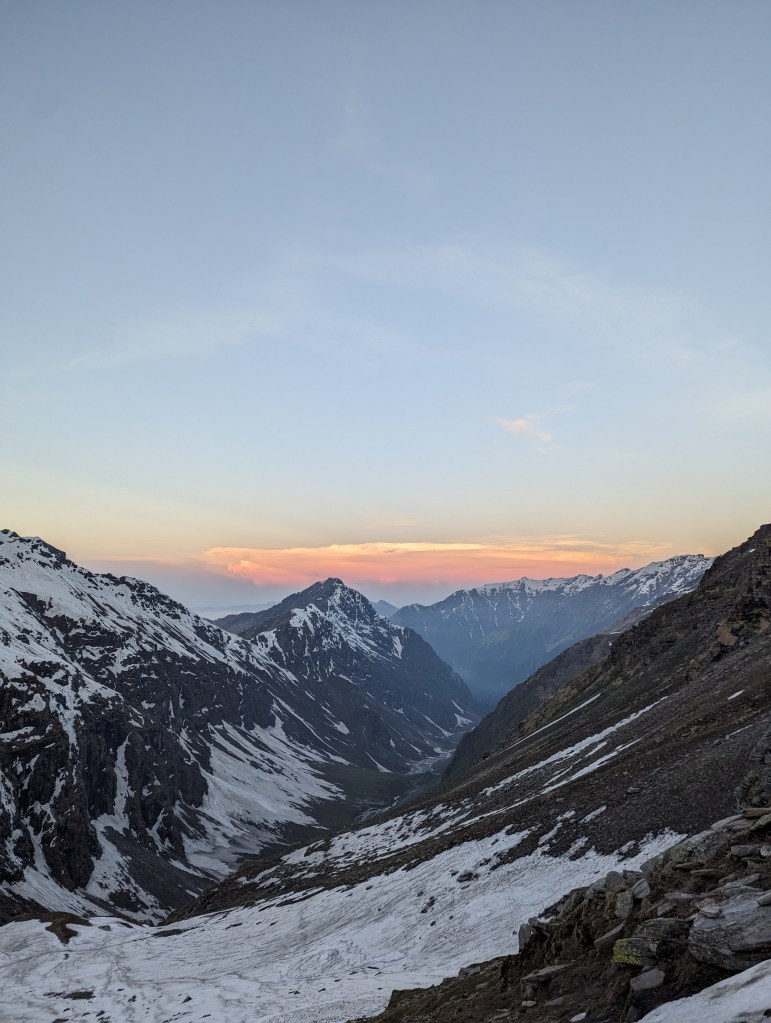
Around 8:30 A.M,we witnessed the “Rupin Gully”. It is a steep, 70-degree vertical gully which shoots through the mountain. We were thrilled to climb the most awaited section of the trek. Our trek leaders gave us a break right below the gully as it was going to be a treacherous climb. Again, I was wrong. I had underestimated the steepness of the gully. My naive experience had led me to believe that we would cross the section in 15-20 minutes.
It took us 1 hour to climb the 200m climb. It was so steep, no one dared to look anywhere around other than their own footsteps. Some of our team members were totally exhausted, few had vomited and were suffering from severe headache. This section tested the best of us. Everyone was cheering each other up, the winds were in full force, it was extremely cold in the gully. I hadn’t been tested physically this much anywhere. After a treacherous climb of 1 hour, we reached our summit. I was overwhelmed. We could see Kinnaur valley on one side and the Rupin Valley on other side. It was magical. Unfortunately, as we were at an altitude of 15,000ft and the time pressure, we clicked photos and started descending from the summit as soon as possible. As they say, summit is not the final achievement, descending back safely is. Everyone carefully started descending.
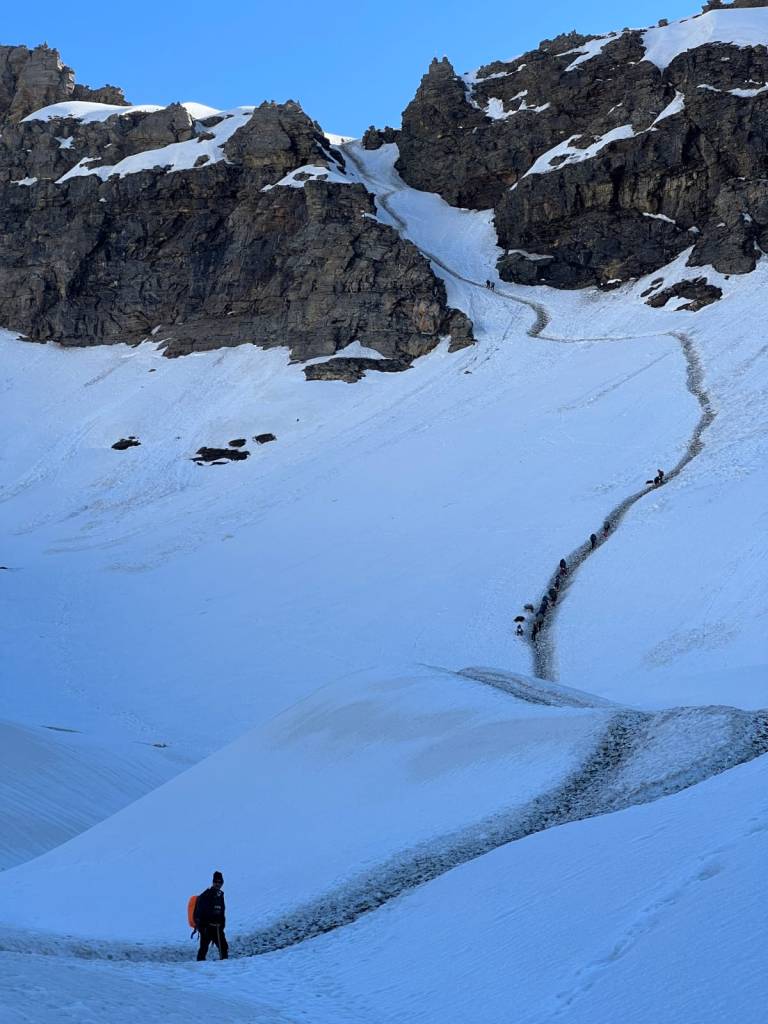
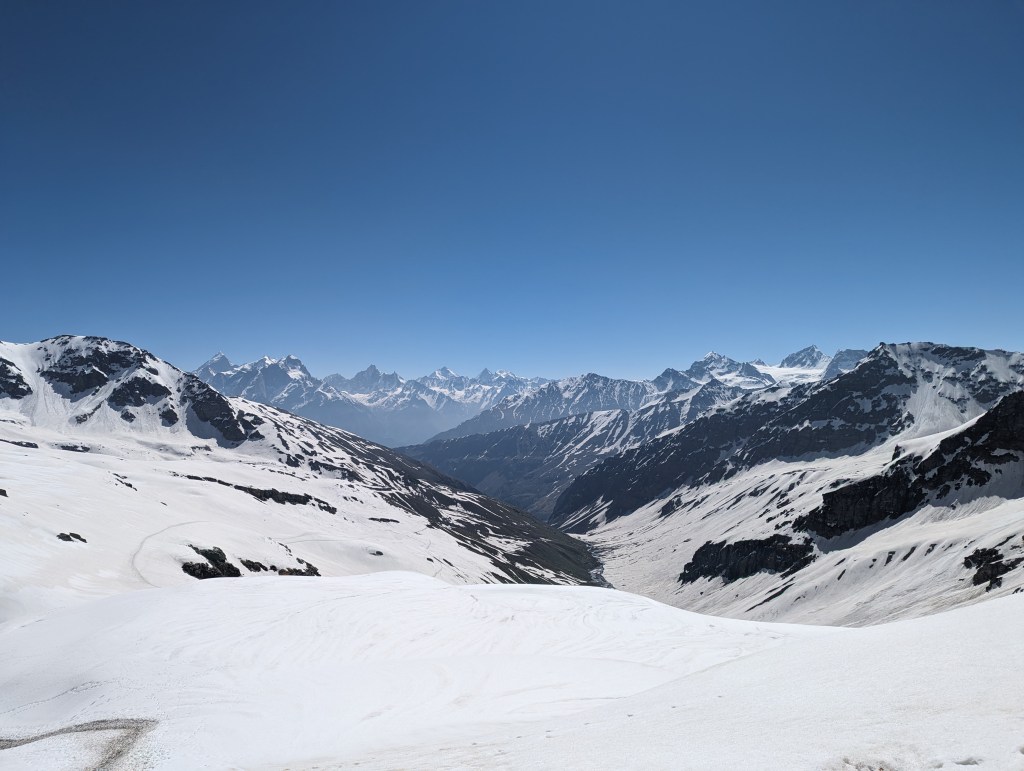
To be honest, as far as beginner trekkers are concerned, the motivation goes down after the summit, and this is exactly what happened with us. After summit, everyone’s motivation and the adrenaline rush had settled. However, we still had to trek for another 6-7 hours which would require a lot of stamina. After a tiring walk of almost 12 hours, we reached our last campsite by 5 PM in the evening.
Ronti Gad is an underrated campsite. From the campsite, we were witnessing the harsh walk we had done from the Rupin pass and on the other side, we could see the shimmering views of Kinner Kailash. The campsite was a blanket of meadow with gigantic peaks right in front of our eyes.
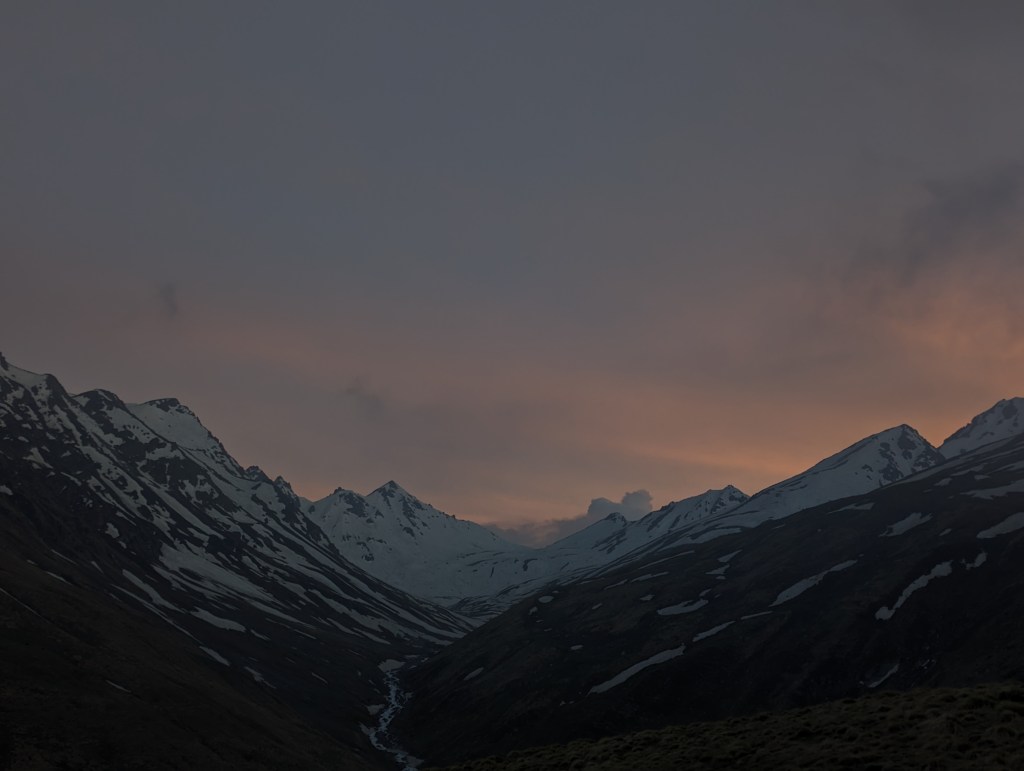
On the last day, we were given the option of either using the buffer day and resting at Ronti Gad or concluding the trek early. Obviously, no one wanted to leave the lovely campsite. We stayed at Ronti Gad on the buffer day, played games and stargazed.
De-briefing
This blog was just a snap of what can be described through words and photographs. I would suggest everyone reading this to do at least one Himalayan trek in their lives. It is truly an enriching experience. It is extremely uncomfortable to be in the mountains living away from our comfortable beds sleeping in tents, but in the hindsight, it is absolutely worth it!
 Where I wander
Leave a comment